Protect & SaveLife Foundation is helping the Homless & Poor Child to education, food, shelter.
Protect & SaveLife Foundation is to empower underprivileged children, youth and women through relevant education, innovative healthcare and market-focused livelihood programmes.
Protect & SaveLife Foundation is to deploy best possible methodology and technology for achieving ideal SROI (social return on investment), to practice and promote good governance.
India, the programme was piloted by Bandhan-Konnagar in 2009, with 300 women in one of the poorest districts of West Bengal, India. Called the ‘Targeting the Hard Core Poor’ (THP) pilot, it provided sustainable micro-entrepreneurship opportunities through carefully sequenced support – a productive asset such as livestock or supplies for petty trade, technical skills training, savings support, temporary cash or in-kind support to tide over immediate consumption needs, and regular mentoring and coaching over 18-24 month.
This helped enable ultra poor women to be engaged in sustainable livelihoods and ultimately graduate out of extreme poverty.
Researchers affiliated to Abdul Latif Jameel Poverty Action Lab (J-PAL) studied the impact of the THP programme at three points in time – the end of the 18-month programme, one year later, and 5.5 years after the programme ended, in 2015, to judge the durability of programme impact.
Five and a half years after the programme ended in West Bengal, beneficiaries who participated in the programme, saw a 46 percent increase in consumption as compared with households that did not receive the programme.
Indicators like total savings, the perception of economic security, and time spent productively for programme beneficiaries also increased relative to the households that did not receive the programme. They also had improved food security, accumulated more assets, and had better access to credit.
THP also demonstrated that for every rupee spent on the programme, ultra-poor households saw Rs 4.33 in benefits, a four-fold improvement.
Now in its tenth year of implementation in India, the THP programme has been scaled up by Bandhan-Konnagar to nine states in India, reaching over 61,000 beneficiaries with funding support from state governments, multilaterals and CSR foundations.
Donate:- Every rupee counts! You can make a difference. Come forward, now…
PAYPAL:- paypal.me/lifesavefoundation9
A street child is someone "for whom the street (in the widest sense of the word, including unoccupied dwellings, wasteland, etc.) has become his or her habitual abode and/or source of livelihood; and who is inadequately protected, supervised, or directed by responsible adults".
India has an estimated one hundred thousand or more street children in each of the following cities: New Delhi, Kolkata, and Mumbai. Mainly because of family conflict, they come to live on the streets and take on the full responsibilities of caring for themselves, including working to provide for and protecting themselves. Though street children do sometimes band together for greater security, they are often exploited by employers and the police.
Their many vulnerabilities require specific legislation and attention from the government and other organisations to improve their condition.
Definition clarification
In the early years of research on street children, the term "street child" included any child that worked on the street. From research, however, different categories of children on the streets have been distinguished, while still recognizing that children's complex experiences are difficult to define. Mark W. Lusk, a prominent researcher of street children, developed four categories of children on the street from his research: children who work on the street but return to their families at night, children who work on the street but whose family ties are dwindling, children who live and work with their families on the street, and children who work and live on their own on the street.
The term "street child" has come to refer only to the last group. UNICEF defines a street child as, "...any girl or boy ... for whom the street (in the widest sense of the word, including unoccupied dwellings, wasteland, etc.) has become his or her habitual abode and/or source of livelihood; and who is inadequately protected, supervised, or directed by responsible adults".[1] It is important to distinguish the group of children that live on their own on the streets because their lives vary greatly from those of children who simply work on the streets; they thus have different needs and require targeted attention.
While 18 million children work on the streets of India, it is estimated that only 5–20 percent of them are truly homeless and disconnected from their families. Because the street children in India have unique vulnerabilities – the amount of time they spend on the street, their livelihood depending on the street, and their lack of protection and care from adults – they are a subgroup of the Indian population that deserve specific attention in order to ensure that their needs are known.[9] As the most vulnerable group of children in India according to UNICEF, they need to be understood as much as possible. Characteristics
It is difficult to obtain accurate data about them because of their floating character. Street children usually have no proof of identification and move often. Of the 50,000 people in India that are officially reported as leaving home annually, 45 percent are under 16; this number, though, is likely very low.[11] Various studies have formulated estimates of certain cities. In the late 1980s, for instance, it was estimated that there were at least 100,000 street children in both Kolkata and Bombay. Overall, estimates for the total number of street children in India range from 400,000-800,000.
Age
Because it is difficult to obtain precise and accurate statistics about street children, information about their ages is approximate. Most of the street children in India are over 6, and the majority is over 8. The mean age of street children in a National Institute of Urban Affairs study in 1989 was 13 years.Another study in 1989 by UNICEF found that 72 percent of the street children studied were ages 6–12 and 13 percent were under 6 years of age. Gender
The majority of street children in India are boys with little or no education.
Causes
The street children in India choose to leave their families and homes for strategic reasons. Three hypotheses have been put forth in an attempt to explain their choices: urban poverty, aberrant families, and urbanization. Evidence can to some degree support all three of these hypotheses. In one study of 1,000 street children living in Bombay conducted in 1990, 39.1 percent of street children said they left home because of problems and fights with family, 20.9 percent said they left because of family poverty, and 3.6 percent said that they wanted to see the city. The street children and children running away from home are connected. A child running away from home ends on the street in most situations. There is lot of data available on why children run away, revealing many reasons for doing so. Some reasons are simple, some complex. Some time the reasons are because of the child's behavior, and some times the causes are because of parents. A child not going to school or not doing home work and thus fearing beatings, is a very common cause. A child stealing money, fighting with siblings are reasons too.
This study illustrates the trend found by most researchers: most children leave their families to live on the street because of family problems. Family problems include such things as death of a parent, alcoholism of father, strained relationships with stepparents, parent separation, abuse, and family violence. Additionally, street children usually come from female-headed households.
Most children who leave home to live on the streets come from slums or low cost housing, both which are areas of high illiteracy, drug use, and unemployment. Children usually transfer their lives to the streets through a gradual process; they may at first only stay on the street a night or two. Gradually they will spend more time away from home until they do not return.
Once on the streets, children sometimes find that their living conditions and physical and mental health is better than at home; however, this fact speaks to the poor conditions of their homes rather than good conditions in the street. Street conditions are far from child-friendly.[5] Once they leave home, many street children move around often because of the fear that their relatives will find them and force them to return home. Sadly, many children are kidnapped and treated as slaves by the kidnappers. The kidnappers make them beg for money the whole day on the streets and enjoy themselves with the money they get from the children.
Economic activity Work
As street children must provide for themselves, work is a very important aspect of their lives. Unfortunately, working conditions for street children are often very poor because they are confined to working in the informal sector, which is unregulated by the government. In Bombay, 50,000 children are illegally employed by 11,750 hotels, restaurants, canteens, tea shops, and eating places. Because of street children's lack of protection from a family and the law, employers often exploit them, making them virtual prisoners, sometimes withholding pay, and abusing them. Employers that would not mistreat the children often will not hire them because they are seen as too great of a risk.
Because of the low pay from employers, street children in India often choose to be self-employed or work multiple jobs. In fact, the majority of them are self-employed. One of the most common economic activities done by the children is scavenging for recyclable materials, such as plastic, paper, and metal.
Other jobs include cleaning cars; petty vending, selling small items such as balloons or sweets; selling newspapers or flowers; begging; shining shoes; working in small hotels; working on construction sites; and working in roadside stalls or repair shops. Street children, especially the older children, are also sometimes engaged in activities such as stealing, pick-pocketing, drug-peddling, and prostitution, though this is a small proportion. Most of the street children work 8–10 hours total each day in their various economic activities.
Spending
The earnings of street children fluctuate greatly, but they usually only make enough for subsistence.Most street children in India earn between 200 ($4.00) and 830 rupees a month, with older children making more than younger children. Self-employed children also typically make more than children who are employed under an employer. The largest expense in a street child's budget is food, which often costs 5–10 rupees a day. In order to cut down on food expenses, many children drink tea to dull hunger.
The money street children earn that is not spent on food is usually quickly spent on other things because older children and police frequently steal their money. This lack of ability to save causes severe financial insecurity. While children occasionally send some of their earnings home to their families, they spend most of their extra money on entertainment.
Many street children spend 300 rupees a month on movies, though older children also use their money to buy cigarettes, chewing tobacco, alcohol, and drugs. Street children often spend very little on clothing because their employers often provide clothes for work or their families occasionally give them clothes if they know where they are living. Also, the boys among them do not mind wandering fully or partially naked in public because it adds to the people's sympathy for them.
Education
The education of street children in India is very poor and often nonexistent. A study of street children in Bombay in 1989 found that 54.5 percent had never been enrolled in school and 66 percent of the children were illiterate. A 2004 study of street children in Bombay revealed that circumstances were largely the same: 60 percent of the children had never attended school and approximately two-thirds were illiterate.
Thirty percent had been to elementary school, while only 10 percent had been to middle or high school. In fact, many children in the 2004 study said that one of the reasons they ran away from home is because they did not want to be forced to work and unable to attend school.[8] Obviously, however, the demands of living alone make it very unlikely that they will be able to obtain education through leaving.
Relationships and coping
The street children in India are especially vulnerable among low-income children because they do not have the support structures that other children normally have, namely families and the psychological and monetary support they offer. Thus, street children adopt strategies to cope with the harsh realities of their lives. For many, these strategies include developing a tough exterior and strong independence to hide their vulnerability. They live in survival-mode, constantly having to be aware of their surroundings and fight for their safety. These circumstances lead children to engage in behaviors that children in families typically do not, such as creating a new identity, using aggression frequently, and valuing relationships based on what can be gained from them.
While the majority of street children in India have been found to use positive coping mechanisms to deal with the stress of their lives, some choose maladaptive strategies, such as drinking alcohol, using drugs, and visiting prostitutes. When questioned about their substance use, many street children in Bombay reported that the cause was frustration concerning living on the street or conflicts in their family which caused them to leave home.
Fortunately, street children are not entirely on their own. Many form groups with other street children to protect themselves. These groups normally have a leader and specific territory; unfortunately, though these groups bring safety to most, younger children are sometimes used by the leader to steal or do other illegal activities. Street children in Bombay report relying on their friends for help when they are sick, money when they run out, and information about work when they need a job. Street children spend much of their free time with their friends, often going with them to the movies.
Among the most important deprivations faced by street children is the lack of a protective and guiding adult, but some street children manage to find individuals to fulfill this role. Though most live on their own or with friends, some street children form connections with families that live on the streets or in slums and see these families as their substitute families. Many of these children find a "mother-figure" that cares for them when they are ill and is interested in their well-being.
Health and nutrition
Street children in India face additional vulnerability because of their lack of access to nutritious food, sanitation, and medical care. Street children lack access to nutritious food because many are dependent on leftovers from small restaurants or hotels, food stalls, or garbage bins. In a study of street children in Bombay in 1990, 62.5 percent of the children obtained food from hotels.
Lack of sanitation in bathing, toilets, and water also contributes to poor health. In the same study of street children in Bombay, 29.6 percent of children reported bathing in the sea and 11.5 percent reported bathing in pipes, wells, or canals. Open air bathing of street children is in fact a very common sight in all parts of India. These children have to put their naked bodies on display for a very long time before, during and after bathing. As a result, they develop hardly any sense of modesty. They as well as the onlookers have a casual approach to this phenomenon. Street children also lack restroom facilities, demonstrated by the fact that 26.4 percent of the children used the roadside or railway line for their toilet. For water, the children reported asking restaurants or hotels for water (69.1 percent) or using pipes and water taps (15.6 percent).
Most of the street children in India also lack access to medical care, which is especially detrimental during times of illness or injury. The study of street children in Bombay found that 34.9 percent had an injury and 18.9 percent had a fever in the past three months. Only about a third of the children received any help with their illness or injury, though some were able to receive help at a government clinic.
Other studies have found that many illnesses are very prevalent among street children. A study conducted in 2002 on the street children in Kolkata found that six in every 554 street children from ages five to fourteen are HIV positive. In Bangor Basti, 98 percent of children are estimated to have dental caries. Additionally, most street children do not have winter clothing, leaving them more vulnerable to illness during the winter.
Abuse
Street children in India are frequently exposed to abuse and extortion. According to UNICEF, violence against children in India includes neglect, emotional abuse, sexual abuse, and exploitation. The rate of child abuse increased to nearly 8000 in 2007. An Indian government study in 2007 stated that two out of every three children in India were physically abused and that 50% of the nearly 12,000 studied children testified one or more forms of sexual abuse. This increase is probably due to increased awareness and reporting of abuse. Other studies include that 7,200 children, including infants, are raped every year in India, and the government refuses to comment on these serial child abuses that continue. Many child activists believe that cases go unreported.
Because they have no social status and no adults to protect them, street children identify being physically threatened and intimidated by adults as the one factor that contributes most to the misery of living on the streets. The primary cause for this treatment is the views that the police and general public hold toward them: most scorn them and react to them with hostility.
Abuse by the Indian police is often reported by street children. Many street children have reported that police will beat them in order to coerce them into giving them a "cut" for working in certain areas. Police often arrest street children under the Vagrancy Act, and, having no formal way to appeal their arrest, the children must bribe or work at the police station until their "debt" has been paid. Under a government-sponsored programme called "Operation Beggar," street children in Bombay were rounded up and given into what was essentially indebted servitude.
Many factors contribute to the police abuse of street children, including the police perceptions of the children, widespread corruption, a culture of police violence, the inadequacy and non-implementation of legal safeguards, and the level of impunity that the police enjoy. Though the Juvenile Justice Act, which applies to all the states and Union Territories in India except Jammu and Kashmir, prohibits detaining neglected or delinquent juveniles in police lock-ups or jails, it is rarely enforced.
One study that looked at the abuse of street children in Jaipur City, India in 2009 provided new insight into the abuse that street children in India suffer by studying the types and prevalence of abuse and how these things were related to other factors. The street children in the study reported all five types of abuse: general abuse and neglect, health abuse, verbal abuse, physical abuse, psychological abuse, and sexual abuse. Verbal and psychological abuse were reported the most. Older children and children with higher incomes were abused more than younger children and children with lower incomes, respectively.
Donate:- Every rupee counts! You can make a difference. Come forward, now…
PAYPAL:- paypal.me/lifesavefoundation9
Not owning the land upon which they live denies millions of households concomitant social benefits
One of the most challenging problems of our times is homelessness. While we continue to record improvements in dealing with poverty, homelessness has been plagued by an unimaginative response from policy doctors. The apathetic approach of successive governments is symptomatic of the disease that ails India’s housing system.
A decent habitat for the poorer sections of society will not only contribute towards their well-being and real asset creation, but also catalyse overall social and economic growth. The priority for housing ought to be higher than education and health. For many people in the developing world, the land on which they live is their only asset. If that property is not publicly recognised as belonging to them, they lose out on social benefits.
Bedrock of possibilities
Many who live in slums have little to no control over or ownership of the property they live on. The formal financial sector is unable to serve them. Once titled, they could obtain access to several public benefits including loans. Housing is often the bedrock of other development interventions: owning land boosts health profiles, educational outcomes and gender equality. The converse is equally true.
The challenges for India are daunting: An estimated 65 million people, or 13.6 million households, are housed in urban slums, according to the 2011 Census which estimated that an additional 1.8 million people in India were homeless. There is extensive need for repair of dilapidated housing stock and the provision of essential services.
India is urbanising fast. Around 38 per cent of India will be urbanised by 2025. This would mean some 540 million people will be living in urban areas by 2025. Experts estimate that 18 million households in India are in need of low-income housing. This paired with a shrinking supply of land and high construction costs is leading to a growing slum population. Experts estimate that by 2025 more than 42 per cent of India’s population will be urban. Currently, the level of public services offered in slums is seriously deficient. An estimated 58 per cent of slum areas have open or no drainage, 43 per cent transport water from outside communities, 34 per cent have no public toilets, and an average of two power outages occurs each day.
Providing stable, affordable housing is a major first step to establishing and sustaining a basic standard of living for every household. Several attempts to relocate slum dwellers to the city’s fringes have been botched because the location restricts the access of residents to employment, schools and other amenities. Slum-dwellers favour upgradation of existing facilities and secure tenancy. Evictions from slums and the demolition of settlements have risen as cities expand and are brought under programmes that aim to create centres similar to those in western countries.
Some recommendations
There are various suggestions from experts that can serve as useful markers for policymakers. One is that the Government should improve the legal and regulatory environment and increase the supply of affordable, legal shelter with tenure security and access to basic services and amenities. The Government should undertake physical upgradation of informal settlements sometimes accompanied by the provision of public services, such as access to roads, electricity, water supply and sanitation. These services create a high level of perceived tenure security without a formal change of legal status and have encouraged local improvements and investment.
The social consultancy, FSG, says that up to 37 million households — a quarter of India’s urban population — live in informal housing, including slums. It recommends giving them basic property rights. The report argues that this would encourage residents to invest in home improvement and encourage municipalities to provide infrastructure and better services. The research focuses specifically on owner-occupants, those who don’t pay rent, and are not investing in improving their homes because of fear of eviction.
There are various categories of slums in India: unidentified, identified, recognised, notified and unauthorised housing. The report divides informal housing into three segments:insecure housing (unidentified slums) where people have no property rights and are most vulnerable to eviction; transitional housing (recognised slums and identified slums) which exist in government records and are gaining de facto rights; secure housing (notified slums and unauthorised housing) where people do have some property rights and can’t be evicted summarily. In India, slums classified as “unobjectionable” are eligible for upgrading. These are in non-residential zones, on low-lying lands, or where roads and other public infrastructure have been proposed.
Property rights
Conventionally, property rights mean the right to use, develop and transfer property. The researchers advise a different set of property rights for informal housing, one that gives the owner-occupant mortgageable status. The Government could also permit the owner-occupant to have only the right to use the property and access basic services as in public housing. Alternatively, it could give property rights on lease. It could restrict use and exchange of such property to only between low-income groups. In other cases, it could integrate outlying informal settlements through a process of mutual compromise. This can bring unplanned settlement into acceptable relation with the planning norms. Titles could be regularised in exchange for acceptance agreed urban planning guidelines.
The Odisha government recently took a revolutionary decision by providing urban poor residing in 3,000 slums land rights for residential use that are heritable, mortgageable and non-transferable. Endowing slum dwellers with mortgaeable titles can open the gates to many opportunities for improving health, education, employment and providing entitlements to social programmes. The stresses on account of homelessness are mounting. Solutions will come from pairing passion with entrepreneurship and digging deep into the challenge at hand.
Donate:- Every rupee counts! You can make a difference. Come forward, now…
UNITED NATIONS: India is home to over 30% of almost 385 million children living in extreme poverty, the highest in south Asia, according to a new report by World Bank Group and Unicef, 'Ending Extreme Poverty: A Focus on Children.'
It said children are more than twice as likely as adults to live in extreme poverty. In 2013, 19.5% of children in developing nations were living in households that survived on an average of USD 1.90 a day or less per person, compared to just 9.2% of adults. Globally, almost 385 million children are living in extreme poverty.
The report said sub-Saharan Africa has both the highest rates of children living in extreme poverty at just under 50%, and the largest share of the world's extremely poor children, at just over 50%. "South Asia has the second highest share at nearly 36% -with over 30% of extremely poor children in India alone," it said, adding that four out of five children in extreme poverty live in rural areas.
The report said children are disproportionately affected as they make up around a third of the population studied but half of the extreme poor. The youngest are the most at risk with more than one-fifth of children under the age of five in the developing world living in extremely poor households. "Effects of poverty are most damaging to children. They are the worst off and the youngest children are the worst off of all," said Anthony Lake, executive director, Unicef.
Child poverty has a negative and long-lasting impact on a child's ability to learn, build skills, find employment and avoid poverty. It is well-understood that children who experience poverty and lack of educational opportunities often grow up to become adults who experience poverty and low education levels. A lack of healthy food, health care, and a stimulating environment lowers a child's ability to learn for the rest of their lives. A child's experience during the early years of development (prenatal to 8 years of age) sets a critical foundation for their entire life course. All aspects of Early Childhood Development (ECD) - including physical, social/emotional and language/cognitive domains – strongly influence basic learning, school success, economic participation, social citizenry and health. The environments where children grow up, live and learn – with parents, caregivers, family, and teachers – have the most significant impact on their development.
Children living in poverty show almost 3.5 times the number of conduct disorders, almost twice the chronic illnesses and twice the rate of school problems, hyperactivity and emotional disorders as children who don't experience poverty. Canadian children that live in poverty often suffer from iron deficiencies, which lead to difficulties in cognitive development. They also have such health, social, and cognitive disadvantages compared to other children, that they are generally less equipped - socially, emotionally and physically - to undertake school programs. If their disadvantaged position and different day-to-day experiences are not taken into account by school education, they are unable to benefit fully from the school system. Numerous studies have consistently shown that the strongest single predictor of educational achievement and attainment is the socio-economic status of the student's family. Education - in close co-operation with health care, guidance and counseling services, and income generating activities - is pivotal in breaking the vicious cycle of poverty and social exclusion that is the reality for many families.
They can be found everywhere but somehow the Indian State fails to notice them. They are the homeless people of India. According to the government’s definition, homeless or houseless are those who live in “the open or roadside, pavements, in hume-pipes, under flyovers and staircases, or in the open in places of worship, mandaps, railway platforms etc.” Yet when it comes to providing them the basic needs, governments have been failing to spend even their allocated funds. There are 1.77 million homeless people in India.
Last week, the Supreme Court took the Centre and states to task, saying that there should be an audit by the Comptroller and Auditor General of the money disbursed by the Centre to the states for a scheme under the National Urban Livelihoods Mission (NULM), and observed that these funds, which are meant for a specific purpose, should not be diverted.
This is not the first time the SC has rapped the Centre. In 2016, the apex court slammed the Centre and states for their lackadaisical approach in providing shelters to the poverty-stricken in urban areas despite availability of sufficient funds.
It had also observed that the mission of the NULM scheme “remains a distant dream even after lapse of a long period.”
The NULM was launched in September 2013 to reduce poverty and vulnerability of urban poor households. The Centre had earlier told the court that an amount of Rs 1,000 crore, released under the NULM, does not pertain only to urban homeless but to other activities also.
The good news is that there has been an overall decline in the houseless population from the last Census. While there has been a 28% decline reported from rural India, there has been a 20% increase in houseless people living in the cities. But still there is a long way to go.
But only spending money will not solve the problem. Here’s what needs to be done.
First, the State needs to identify and address the structural causes of homelessness; second, a national moratorium on forced evictions and demolitions should be introduced; third, enhanced policy coherence and convergence between housing schemes in urban and rural areas and schemes for the provision of water and sanitation; fourth, the central and state governments should put in place effective and timely mechanisms to collect data on evictions, including with disaggregation of the persons who are evicted by age, gender, disability, caste and religion.
Donate:- Every rupee counts! You can make a difference. Come forward, now… PAYPAL:- https://www.paypal.me/lifesavefoundation9
Poverty is a significant issue in India, despite being one of the fastest-growing economies in the world, clocked at a growth rate of 7.11% in 2015, and a sizable consumer economy. The World Bank reviewed and proposed revisions on May 2014 to its poverty calculation methodology and purchasing power parity basis for measuring poverty worldwide. According to this revised methodology, the world had 872.3 million people below the new poverty line, Nigeria, and Congo is expected to overtake India by the end of 2019. As of 2014, 58% of the total population were living on less than $3.10 per day.[1] According to the Modified Mixed Reference Period (MMRP) concept proposed by World Bank in 2015, India's poverty rate for period 2011-12 stood at 12.4% of the total population, or about 172 million people; taking the revised poverty line as $1.90.
The World Bank has been revising its definition and benchmarks to measure up poverty since 1990, with a $2 per day income on purchasing power parity basis as the definition in use from 2005 to 2013.[5] Some semi-economic and non-economic indices have also been proposed to measure poverty in India; for example, the Multi-dimensional Poverty Index placed 33% weight on number of years spent in school and education and 6.25% weight on financial condition of a person, in order to determine if that a person is poor.
The different definitions and different underlying small sample surveys used to determine poverty in India, have resulted in widely different estimates of poverty from 1950s to 2010s. In 2012, the Indian government stated 22% of its population is below its official poverty limit.[7] The World Bank, in 2011 based on 2005's PPPs International Comparison Program,[8] estimated 23.6% of Indian population, or about 276 million people, lived below $1.25 per day on purchasing power parity.[9][10] According to United Nation's Millennium Development Goals (MDG) programme 270 millions or 21.9% people out of 1.2 billion of Indians lived below poverty line of $1.25 in 2011-2012.
From late 19th century through early 20th century, under British colonial rule, poverty in India intensified, peaking in the 1920s.[12][13] Famines and diseases killed millions each time.[14][15] After India gained its independence in 1947, mass deaths from famines were prevented. Rapid economic growth since 1991, has led to sharp reductions in extreme poverties in India.[16][17] However, those above poverty line live a fragile economic life.
As per the methodology of the Suresh Tendulkar Committee report, the population below the poverty line in India in 2009-2010 was 354 million (29.6% of the population) and that in 2011-2012 was 269 million (21.9% of the population).[19] The Rangarajan Committee said in 2014 that the population below the poverty line in 2009-2010 was 454 million (38.2% of the population) and that in 2011-2012 was 363 million (29.5% of the population).[20] Deutsche Bank Research estimated that there are nearly 300 million people who are middle class.[21] If former trends continue, India's share of world GDP will significantly increase from 7.3% in 2016 to 8.5% by 2020.[22] In 2015, around 170 million people, or 12.4%, lived in poverty (defined as $1.90 (Rs 123.5)), a reduction from 29.8% in 2009.
The Asian Development Bank estimates India's population to be at 1.28 billion with an average growth rate, from 2010-2015, at 1.3%. In 2014, 49.9% of the population aged 15 years and above were employed. However, there are still 21.9% of the population who live below the national poverty line.[25] The World Poverty Clock shows real-time poverty trends in India, which are based on the latest data, of the World Bank, among others.
From November 2017, the World Bank started reporting poverty rates for all countries using two new international poverty lines: a "lower middle-income" line set at $3.20 per day and an "upper middle-income" line set at $5.50 per day. India falls in the lower middle-income category. Using the $3.20 per day poverty line, the percentage of the population living in poverty in India was 60% (2011). This means that 763 million people in India were living below this poverty line in 2011.
Poverty prevalence and estimates
The 19th century and early 20th century saw increasing poverty in India during the colonial era. Over this period, the colonial government de-industrialized India by reducing garments and other finished products manufacturing by artisans in India, importing these from Britain's expanding industry with 19th century industrial innovations, while simultaneously encouraging conversion of more land into farms, and of agricultural exports from India.
Eastern regions of India along the Ganges river plains, such as those now known as eastern Uttar Pradesh, Bihar, Jharkhand and West Bengal, were dedicated to producing poppy and opium, which were then exported to southeast and east Asia particularly China, with the trade an exclusive monopoly first of East India Company, and later the colonial British institutions. The economic importance of this shift from industry to agriculture in India was large by 1850, it created nearly 1,000 square kilometres of poppy farms in India in its fertile Ganges plains, led to two opium wars in Asia, with the second opium war fought between 1856 and 1860. After China accepted opium trade, the colonial government dedicated more land exclusively to poppy, the opium agriculture in India rose from 1850 through 1900, when over 500,000 acres of the most fertile Ganges basin farms were devoted to poppy cultivation, opium processing factories owned by colonial officials were expanded in Benares and Patna, and shipping expanded from Bengal to the ports of East Asia such as Hong Kong, all under exclusive monopoly of the British. By early 20th century, 3 out of 4 Indians were employed in agriculture, famines were common, and food consumption per capita declined in every decade. In London, the late 19th century British parliament debated the repeated incidence of famines in India, and the impoverishment of Indians due to this diversion of agriculture land from growing food staples to growing poppy for opium export under orders of the colonial British empire.
These colonial policies moved unemployed artisans into farming, and transformed India as a region increasingly abundant in land, unskilled labour and low productivity, and scarce in skilled labour, capital and knowledge. On an inflation adjusted 1973 Rupee basis, the average income of Indian agrarian labourer was Rs. 7.20 per year in 1885, against an inflation adjusted poverty line of Rs. 23.90 per year. Thus, not only was the average income below poverty line, the intensity of poverty was severe. The intensity of poverty increased from 1885 to 1921, then began a reversal. However, the absolute poverty rates continued to be very high through the 1930s. The colonial policies on taxation and its recognition of land ownership claims of zamindars and mansabdars, or Mughal era nobility, made a minority of families wealthy, while it weakened the ability of poorer peasants to command land and credit. The resulting rising landlessness and stagnant real wages intensified poverty.
The National Planning Committee of 1936 noted the appalling poverty of undivided India.
(...) there was lack of food, of clothing, of housing and of every other essential requirement of human existence... the development policy objective should be to get rid of the appalling poverty of the people. — Nehru, The Discovery of India, (1946)
The National Planning Committee, notes Suryanarayana, then defined goals in 1936 to alleviate poverty by setting targets in terms of nutrition (2400 to 2800 calories per adult worker), clothing (30 yards per capita per annum) and housing (100 sq. ft per capita). This method of linking poverty as a function of nutrition, clothing and housing continued in India after it became independent from British colonial empire.
These poverty alleviation goals were theoretical, with administrative powers resident in the British Empire. Poverty ravaged India. In 1943, for example, despite rising agricultural output in undivided South Asia, the Bengal famine killed millions of Indians from starvation, disease and destitution. Destitution was so intense in Bengal, Bihar, eastern Uttar Pradesh, Jharkhand and Orissa, that entire families and villages were "wiped out" of existence. Village artisans, along with sustenance farming families, died from lack of food, malnutrition and a wave of diseases. The 1943 famine was not an isolated tragedy. Devastating famines impoverished India every 5 to 8 years in late 19th century and the first half of 20th century. Between 6.1 and 10.3 million people starved to death in British India during the 1876-1879 famine, while another 6.1 to 8.4 million people died during 1896-1898 famine. The Lancet reported 19 million died from starvation and consequences of extreme poverty in British India, between 1896 and 1900.Sir MacDonnell observed the suffering and poverty in 1900, and noted, "people died like flies" in Bombay. After Independence 1950 Minhas published his estimates of poverty rates in 1950s India as cyclical and a strong function of each year's harvest. Minhas disagreed with the practice of using calories as the basis for poverty estimation and proposed a poverty line based on real expenditure per year (Rs 240 per annum). In 1956-57, a good harvest year, he computed India's poverty rate to be 65% (215 million people). For 1960, Minhas estimated the poverty to be 59%.
1960s A Working Group was formed in 1962 to attempt to set a poverty line for India. This Working Group used calories required for survival, and income needed to buy those calories in different parts of rural India, to derive an average poverty line of Rs. 20 per month at 1960-61 prices.
Estimates of poverty in India during the 1960s varied widely. Dandekar and Rath, on the behalf of then Indian government, estimated that the poverty rate in 1960s remained generally constant at 41%. Ojha, in contrast, estimated that there were 190 million people (44%) in India below official poverty limit in 1961, and that this below-poverty line number increased to 289 million people (70%) in 1967. Bardhan also concluded that Indian poverty rates increased through the 1960s, reaching a high of 54%.Those above the 1960s poverty level of Rs 240 per year, were in fragile economic groups as well and not doing well either. Minhas estimated that 95% of India's people lived on Rs 458 per year in 1963-64, while the richest 5% lived on an average of Rs 645 per year (all numbers inflation adjusted to 1960-61 Rupee).
1970s - 1980s
Dandekar and Rath in 1971 used a daily intake of 2,250 calories per person to define the poverty line for India. Using NSSO data regarding household expenditures for 1960–61, they determined that in order to achieve this food intake and other daily necessities, a rural dweller required an annual income of ₹ 170.80 per year (₹ 14.20 per month, adjusted to 1971 Rupee). An urban dweller required ₹ 271.70 per year (₹ 22.60 per month). They concluded from this study that 40 percent of rural residents and 50 percent of urban residents were below the poverty line in 1960–61.
Poverty alleviation has been a driver for India's Planning Commission's Task Force on Projections of Minimum Needs and Effective Consumption Demand of the Perspective Planning Division. This division, in 1979, took into account differences in calorie requirements for different age groups, activity levels, and sex. They determined that the average rural dweller needed around 2400 calories, and those in urban areas required about 2100 calories per person per day. To satisfy the food requirement, the Task Force estimated that a consumer spending in 1973–74 of Rs.49.09 per person per month in rural areas and Rs.56.64 in urban areas was appropriate measure to estimate its poverty line.
Poverty remained stubbornly high in India through the 1970s and 1980s. It created slogans such as Garibi Hatao (meaning eliminate poverty) for political campaigns, during elections in early 1970s through the 1980s. Rural poverty rate exceeded 50%, using India's official poverty line for 1970s.
1990s
Another Expert Group was instituted in 1993, chaired by Lakdawala, to examine poverty line for India. It recommended that regional economic differences are large enough that poverty lines should be calculated for each state. From then on, a standard list of commodities were drawn up and priced in each state of the nation, using 1973–74 as a base year. This basket of goods could then be re-priced each year and comparisons made between regions. The Government of India began using a modified version of this method of calculating the poverty line in India.
There are wide variations in India's poverty estimates for 1990s, in part from differences in the methodology and in the small sample surveys they poll for the underlying data. A 2007 report for example, using data for late 1990s, stated that 77% of Indians lived on less than ₹ 20 a day (about US$0.50 per day). In contrast, S.G.Datt estimated India's national poverty rate to be 35% in 1994, at India's then official poverty line of Rs 49 per capita, with consumer price index adjusted to June 1974 rural prices.
2000s The Saxena Committee report, using data from 1972 to 2000, separated calorific intake apart from nominal income in its economic analysis of poverty in India, and then stated that 50% of Indians lived below the poverty line.[82] The Planning Commission of India, in contrast, determined that the poverty rate was 39%.
The National Council of Applied Economic Research estimated that 48% of the Indian households earn more than ₹90,000 (US$1,253.40) annually (or more than US$ 3 PPP per person). According to NCAER, in 2009, of the 222 million households in India, the absolutely poor households (annual incomes below ₹45,000 (US$630)) accounted for only 15.6% of them or about 35 million (about 200 million Indians). Another 80 million households are in the income levels of ₹45,000 (US$630) to ₹90,000 (US$1,300) per year. These numbers are similar to World Bank estimates of the "below-the-poverty-line" households that may total about 100 million (or about 456 million individuals).
The Suresh Tendulkar Committee set up to look into the people living under the poverty line in India submitted its report in November 2009.[84] It provided a new method of calculating the poverty line based on per capita consumption expenditure per month or day. For rural areas, it was Rs 816 per month or Rs 27 per day. For urban areas, it was Rs 1000 per month or Rs 33 per day. Using this methodology, the population below the poverty line in 2009-2010 was 354 million (29.6% of the population) and that in 2011-2012 was 269 million (21.9% of the population).
2010s
The World Bank has reviewed its poverty definition and calculation methodologies several times over the last 25 years. In early 1990s, The World Bank anchored absolute poverty line as $1 per day. This was revised in 1993, and the absolute poverty line was set at $1.08 a day for all countries on a purchasing power parity (PPP) basis, after adjusting for inflation to the 1993 US dollar. In 2005, after extensive studies of cost of living across the world, The World Bank raised the measure for global poverty line to reflect the observed higher cost of living. Thereafter, the World Bank determined poverty rates from those living on less than US$1.25 per day on 2005 PPP basis, a measure that has been widely used in media and scholarly circles.
In May 2014, after revisiting its poverty definition, methodology and economic changes around the world, the World Bank proposed another major revision to PPP calculation methodology, international poverty line and indexing it to 2011 US dollar. The new method proposes setting poverty line at $1.78 per day on 2011 PPP basis. According to this revised World Bank methodology, India had 179.6 million people below the new poverty line, China had 137.6 million, and the world had 872.3 million people below the new poverty line on an equivalent basis as of 2013. India, in other words, while having 17.5% of total world's population, had 20.6% share of world's poor. In October 2015, the World Bank updated the international poverty line to US$1.90 a day.
The Rangarajan Committee set up to look into the poverty line estimation in India submitted its report in June 2014.[86] It amended the calculation of the poverty line based on per capita consumption expenditure per month or day given by the Tendulkar Committee. The new poverty threshold for rural areas was fixed at Rs 972 per month or Rs 32 per day. For urban areas, it was fixed at Rs 1407 per month or Rs 47 per day. Under this methodology, the population below the poverty line in 2009-2010 was 454 million (38.2% of the population) and that in 2011-2012 was 363 million (29.5% of the population).
From November 2017, the World Bank started reporting poverty rates for all countries using two new international poverty lines: a "lower middle-income" line set at $3.20 per day and an "upper middle-income" line set at $5.50 per day. These are in addition to the earlier poverty line of $1.90 per day. The new lines are supposed to serve two purposes. One, they account for the fact that achieving the same set of capabilities may need a different set of goods and services in different countries and, specifically, a costlier set in richer countries. Second, they allow for cross-country comparisons and benchmarking both within and across developing regions. India falls in the lower middle-income category. Using the $3.20 per day poverty line, the percentage of the population living in poverty in India (2011) was 60%. This means that 763 million people in India were living below this poverty line in 2011.
Semi-economic measures of poverty
Other measures such as the semi-economic Multi-dimensional Poverty Index (MPI), which places 33% weight on education and number of schooling years in its definition of poverty, and places 6.25% weight on income and assets owned, suggests there were 650 million people (53.7% of population) living in MPI-poverty in India.[6] 421 million of MPI-defined poor are concentrated in eight North Indian and East Indian states of Bihar, Chhattisgarh, Jharkhand, Madhya Pradesh, Orissa, Rajasthan, Uttar Pradesh and West Bengal. The table below presents this semi-economic poverty among the states of India based on the Multi-dimensional Poverty Index, using a small sample survey data for Indian states in 2005.
Reserve Bank of India (2012)
In its annual report of 2012, the Reserve Bank of Indian named the state of Goa as having the least poverty of 5.09% while the national average stood at 21.92%The table below presents the poverty statistics for rural, urban and
combined percentage below poverty line (BPL) for each State or Union
Territory.The highest poverty statistics for each category column is coloured light red in the table below.
Nine-year-old Jessica would sit on a moldy, damp mattress in a rusty zinc-and-cardboard shack in Honduras and pray for a new house. When it rained, the dirt floor of her home turned to mud. When the wind pounded, the flimsy walls would shake and frighten Jessica and her siblings.
Through the outpouring of love and generosity from Food For The Poor donors, Jessica’s prayers were answered and she now lives in a solid concrete home with a roof that doesn’t leak and a door that locks. Her house even has jalousie windows to keep out the rain, roaches and rodents.
“I asked God and God answered my prayers. He always answers prayers. You just have to pray with love,” Jessica said.
Thanks to the kindness of compassionate people like you, Jessica now goes to school and has her very own Bible she reads from every day. She and her family are so happy and grateful living in their solid Food For The Poor home that generous people like you helped provide!
“Our change is so big. I am working. I can make a living. We live safe and clean. Little by little, we will get ahead. I have strong faith,” Jessican’s mother said.
Donate:- Every rupee counts! You can make a difference. Come forward, now… PAYPAL:- https://www.paypal.me/lifesavefoundation9
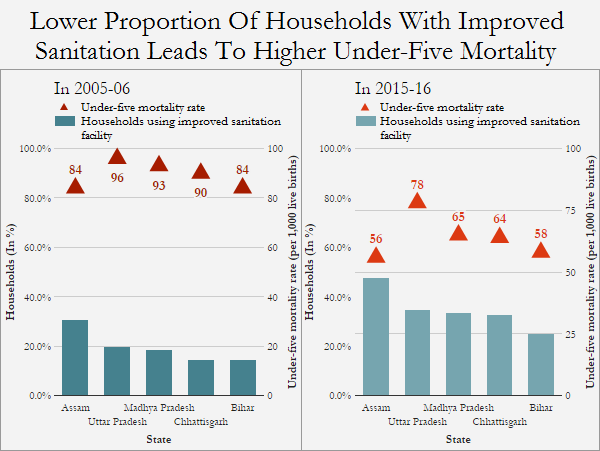
Uttar Pradesh tops the list of under-five mortality.
Despite recently revealed improvements, primitive sanitation is killing, retarding the growth or leaving susceptible to disease millions of Indian children, according to an IndiaSpend analysis of the latest available national health data.
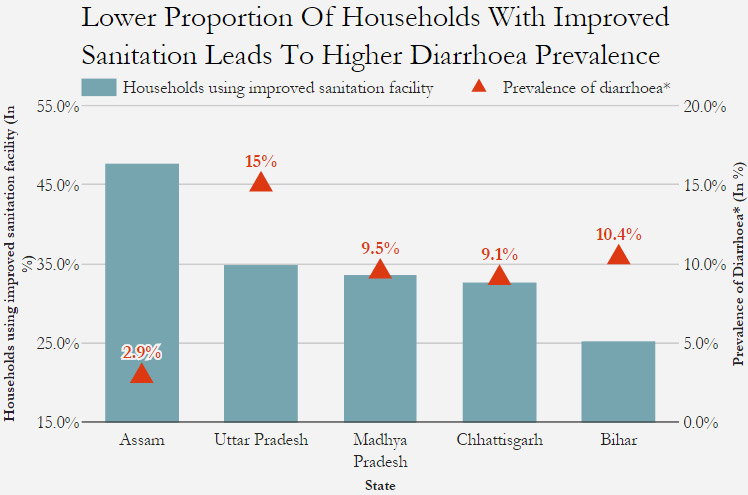
Uttar Pradesh, Bihar, Madhya Pradesh, Assam and Chhattisgarh had India’s highest under-five mortality, higher stunting (low height-for-age) rates and higher prevalence of diarrhoea due to lack of “improved sanitation” – usually a house with its own latrine connected to a sewer or septic tank – according to the National Family Health Survey 2015-’16 or NFHS-4.
Unsafe water, poor hygiene practices and inadequate sanitation are not only the causes of the continued high incidence of diarrhoeal diseases but a significant contributing factor in under-five mortality caused by pneumonia, neonatal disorders and undernutrition, according to this 2016 report by the United Nations Children’s Fund.
Poor sanitation makes unhealthy children prone to water-borne diseases such as diarrhoea, jaundice and cholera, as IndiaSpend reported on January 6, 2016.
Improved sanitation refers to a household with its own toilet,
connected to a piped sewer system or flush to septic tank, flush to pit
latrine, ventilated improved pit/biogas latrine, pit latrine with slab,
twin pit/composting toilet, which is not shared with any other
household. Source: National Family
Health Surveys 2005-06 and 2015-16Under-five mortality rate: deaths of
children under the age of five per 1,000 live birthsIndia’s under-five mortality rate – deaths of children under the age of five per 1,000 live births – declined from 74 in 2005-’06 to 50 in 2015-’16. Over the same time period, households with have improved sanitation have gone up from 29.1% to 48.4%.
Bihar has the the lowest percentage (25%) of households with improved sanitation, and the state recorded an under-five mortality rate of 58 deaths per 1,000 live births in 2015-’16.
One of the leading causes of under-five mortality is diarrhoeal diseases, mostly caused due to lack of sanitation, according to this 2015 study by Public Health Foundation of India, a think tank headquartered in Delhi.
Bihar is followed by Chhattisgarh, with only 32.7% of households reporting use of improved sanitation facilities.
Uttar Pradesh has the highest under-five mortality (78 deaths per 1,000 live births) and only 35% households reported use of improved sanitation facilities.
Only 44% rural households in Uttar Pradesh reported toilet coverage till October 2016 under the Swachh Bharat Abhiyan (Gramin), a central government programme to make India open defecation-free by October 2, 2019.As many as 77% rural households practice open defecation (as against the national average of 55%), IndiaSpendreported in October. Source: National Family Health Survey 2015-16; *Reported in the 2 weeks preceding the surveyDiarrhoeal diseases are also responsible for stunting in children (low height-for-age), according to this 2015 study by The Institute of Fiscal Studies, a think tank in the UK.
“Growth
failure (stunting), often associated with poor nutrition, is
correlated, likely in a causal way, with lower educational and labour
market attainments,” the study said.
◆ Save Girl Child ◆ Girls are the main in the society. all girls have right to educate. we have to save girl child's. we should not kill them. because if there is girl the future well be. girls are the future. and we should not kill the girl child's. don't kill them and don't kill they beautiful life. so treat every girl as your mother and sister. in this world nothing is greater than girl's. that's why the god compared girl's beauty with the nature. the full form of girl is "goddess in our real life". without girl life cannot go on. but now-a-day's the girls are equal to the boys. We cannot think a world without girl child's so we have protect them and we should save the world. "Save a Girl Child and Save Yourself."
◆" a daughter is one of the most beautiful gifts this world has to given" ◆" educate women, educate society." ◆"teach a girl, teach a mother." ◆"your future will be bright if you study day and night". ◆" save girl, save society." ◆" girl child is nations pride". ◆ "beti bachao beti padhao"
"respect girls, love them, care them, treat as mother". because, of a girl now i am in this position. if my mother is not there i could not be and if a girl is only not there the whole world could not be there.
conclusion - my humble request to all that don't kill small girl baby's in the mother womb. let her see the world. so don't kill her beautiful life. please respect girls and protect them. and treat all girls as your mother or sister.
Donate:- Every rupee counts! You can make a difference. Come forward, now… PAYPAL:- paypal.me/lifesavefoundation9
India is a country with more than one billion people, and just one-third of them can read. Rapidly growing size of population, shortages of teachers, books, and basic facilities, and insufficient public funds to cover education costs are some of the nation’s toughest challenges. This is where Children in India are facing the basic challenges. According to a study, more than 30% of educational funds are allocated towards higher education, leaving the primary education in India in sway.
India is fourth among the top 10 nations with the highest numbers of out-of children in primary level. Furthermore, the rate of school drop-outs amongst students is very high. One of the main reasons behind this is poverty. When earning a livelihood and taking care of the members of the family becomes a primary matter of concern in one’s life, education stands a little or, very often, no chance of pursuance. For the underprivileged people in India, education is perceived as a high-priced luxury, and this negative outlook continues on with every new generation.
A disproportionate number of total out-of-school children in India are girls. What denies equal opportunities of children are serious social issues that have arose out of caste, class and gender differences. The practice of child labour in India and resistance to sending girls to school in several parts of the country remain as genuine concerns. If the current trend continues, millions of underprivileged children will probably never set foot in a classroom.
India’s growth relies on a well-educated and skilled workforce. Improving education is a critical area of investment. A shabby foundation in primary education can overturn the lives, careers and productivity of millions of its citizens. Already, a considerable proportion of the adult workforce in India is acutely under-equipped to be eligible for skilled and semi-skilled jobs. In order to build India as a consumer market of global standards, it is very important that every child reaps the benefits of quality education.
Health
As much as 500 million of India’s total population live below the poverty level. These families live in living standards that are among the poorest in the world. Thousands of mothers, newborn babies and children in India die every year from preventable diseases. 27% of deaths of children below age 5 are because of prematurity, 14% due to respiratory infections and 11% due to diarrhoea. 66% of the rural population in India lacks access to preventive medicines.
Healthcare is, by far, out of a poor man’s reach. About 75% of healthcare resources are concentrated in urban areas, where only 27% of the total population resides. 31% of the rural population in India has to travel over 30 km to get even the most urgent medical treatment. About 40% of the population in the metropolitan and large cities live in urban slums, where primary healthcare is provided by health posts. Most of the health posts are located outside the slum areas, making accessibility difficult.
Healthcare is every child’s right but problems like lack of quality infrastructure, shortage of experienced medical functionaries and non-access to basic medicines and medical facilities avert its reach to over 60% of the child population in India. The need of the hour is to work collectively towards promoting health in areas, where the poor children manage to survive.
Nutrition
As per studies, one in three of the world’s malnourished children lives in India. In India, each year, an estimated 27 million children are born—nearly 2 million of which do not survive the fifth birthday. A major cause of this is malnourishment. Over 200 million people in India do not have access to good food, and more than 40% of the children who manage to survive beyond the age five are malnourished. In India, 46% of all children below the age of three are too small for their age, 47% are underweight and at least 16% are wasted. Millions of poor children in India do not receive immunization. 79% of children under age 3 suffer from anaemia. More than 50% of children have poor learning capacity because of iodine deficiency.
Due to inadequate intake of essential nutrients, malnourished children experience several problems, including delays in development, weight-loss and other illnesses. In young children, undernourishment can greatly compromise the immune system, making them highly susceptible to infectious diseases. Besides this, it causes severe growth implications and cognitive implications like memory deficiency, low IQ scores, impaired school performance, and learning disabilities.
Underprivileged children are at a higher risk for various short-term and long-term complications as they experience several macronutrient and micronutrient deficiencies since the time of birth. In fact, it is before birth that many children and their mothers face complications, due to undernourishment. Girls are more at risk of undernourishment than boys because of their inferior social status. Every year, thousands of women die due to negligible intake of essential nutrients during pregnancy. The child and maternal mortality rates for India are amongst the highest in the world. It is believed that malnutrition alone causes 50% of infant and maternal deaths.
NOTE:- YOUR SMALL DONATION CAN MAKE SOME ONE LIFE BETTER AND HEALTHIER. GOD BLESS YOU FOR YOUR HELP. PAYPAL:- paypal.me/lifesavefoundation9